- ApsisLens Archive
- Editorial standards
- Revision 1.0
Methodology and editorial standards
How a record is checked before it is published, how every image is labelled, and what is disclosed when a picture is synthetic.
Scope
ApsisLens publishes forensic documentaries on historical turning points. Each film is issued with a dossier on this site.
The film carries the story. The dossier carries the record: the dates, measurements, sources and image rights the film depends on, set down so that they can be checked and cited. When the two differ in precision, the dossier is the version of record.
Archival verification
A record passes through the same six checks before it is published.
- Start from the primary record. A date, a measurement or a name enters a script only with a source behind it: a photograph with a known photographer and date, a measured drawing, or an item in a named collection.
- Confirm the holder and the rights at the source. Every archival file is traced to the institution that holds it and to the licence shown on that institution’s page on the day of retrieval. Holder, identifier, licence and retrieval date are logged beside the file. A file whose rights are unstated is not used. In Episode 01 a construction photograph was left out for that reason and a diagram took its place.
- Check the narration against the record. Once the narration is recorded, every spoken date and figure is compared with the sources and with the film’s own cards and diagrams. Where a line is looser than the record, the film corrects it on screen and the dossier lists it.
- Say what a picture is not. When no cleared photograph of a moment exists, the stand-in is captioned as a stand-in. A portrait is not presented as a courtroom photograph, and an earlier visit is not presented as the day in question.
- Tie each claim to the film. The dossier gives a film timestamp for each value, so a reader can hear the claim in its context.
- Check against the finished master. The dossier is verified against the exported film, not the script. Episode 01 runs 7:59.42, which is 11,506 frames at 24 frames a second.
Three tiers of visual provenance
Every image in a dossier carries one badge, set in monospace above its caption. There are three tiers. The wording changes with the tier, and so do the mark on the badge and the frame around the plate, so the tiers can be told apart without colour. An archival plate has a plain frame. A cartographic or 3D plate has corner ticks, like the registration marks on a drawing. A synthetic reconstruction has a dashed frame.
| Badge | What it covers | What may be done to it |
|---|---|---|
| Primary archive · USGS public domain | Photographs, drawings and documents made by others and held in a named collection. The second half of the badge names the holder and the rights status, so it changes from plate to plate. | Cropped and resampled, and graded in the film. Never retouched, colourised or composited under this label. |
| Cartographic plate · ApsisLens3D cartographic model · ApsisLens3D schematic · ApsisLens | Maps, terrain models and schematics made by ApsisLens from stated sources. The badge says which. A cartographic plate is a map or a flat diagram. A 3D cartographic model is terrain built from elevation data. A 3D schematic is a cutaway modelled from verified measurements. | Drawn or modelled to explain. Schematic sections are marked schematic and are not survey drawings. Base map and elevation data are credited. |
| Visual reconstruction · Synthetic | Still or moving pictures generated or altered with AI tools, including colourised or relit versions of archival photographs. | Illustrative only. Never offered as evidence, and never captioned with a date as though photographed then. |
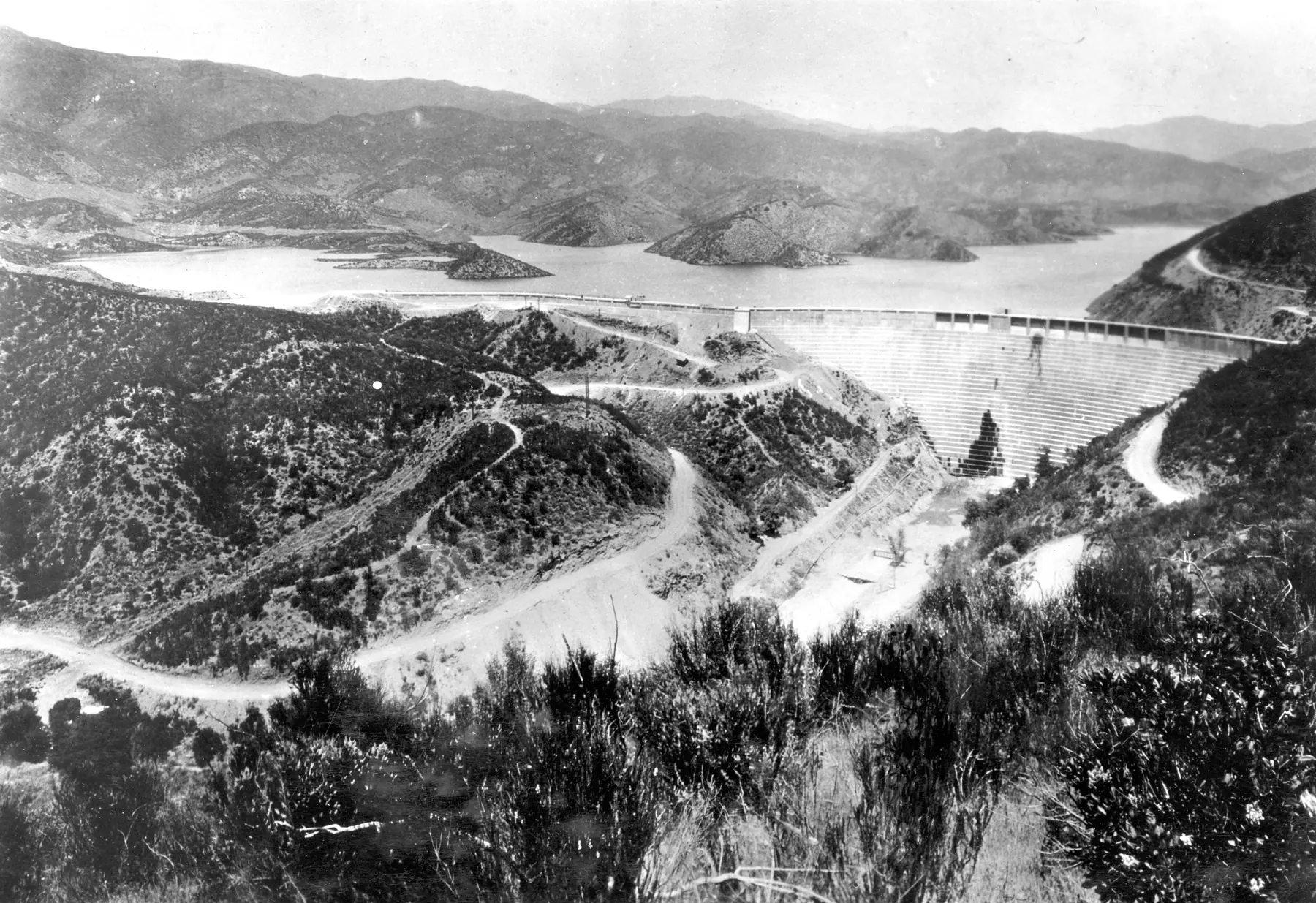
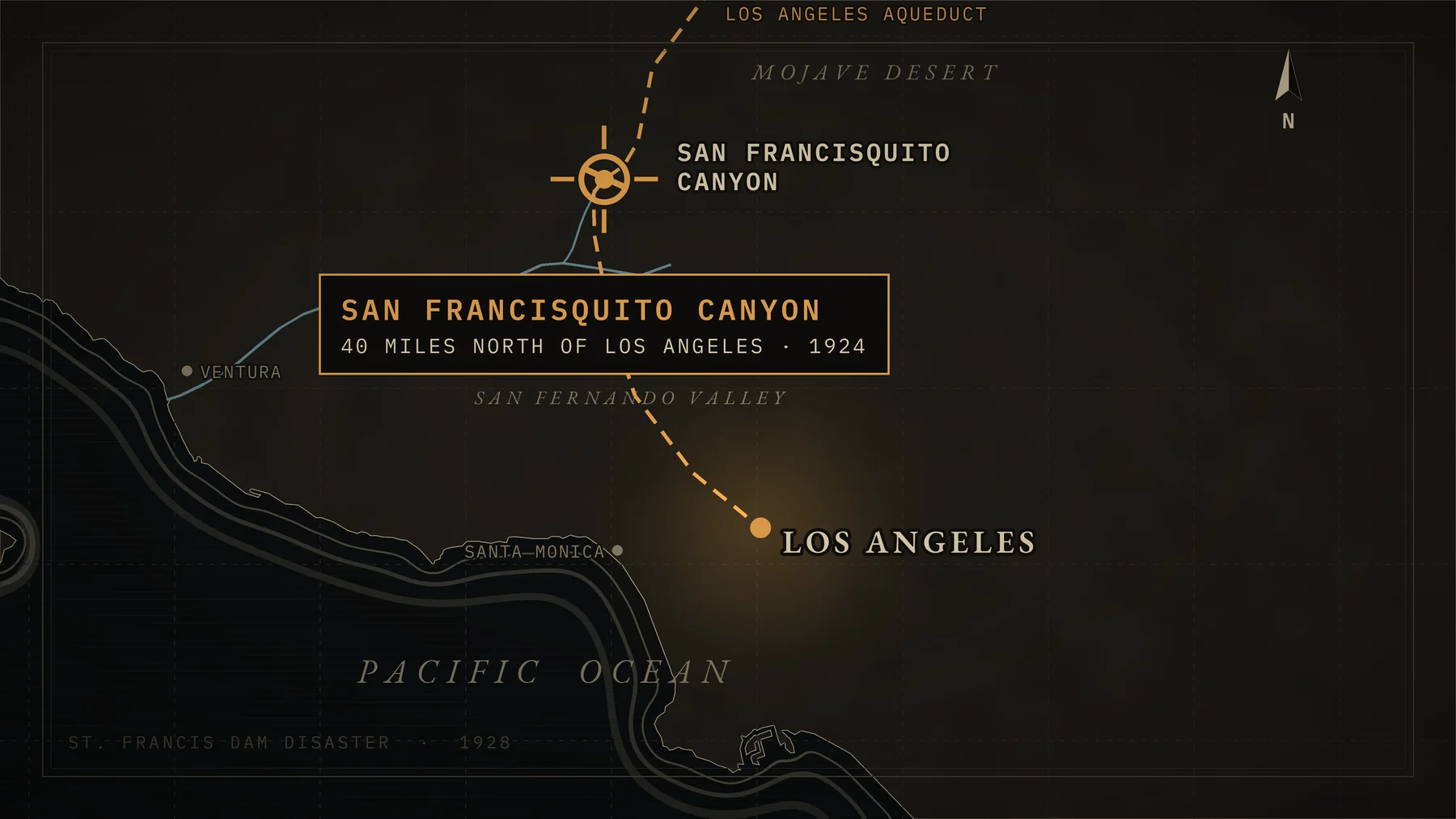
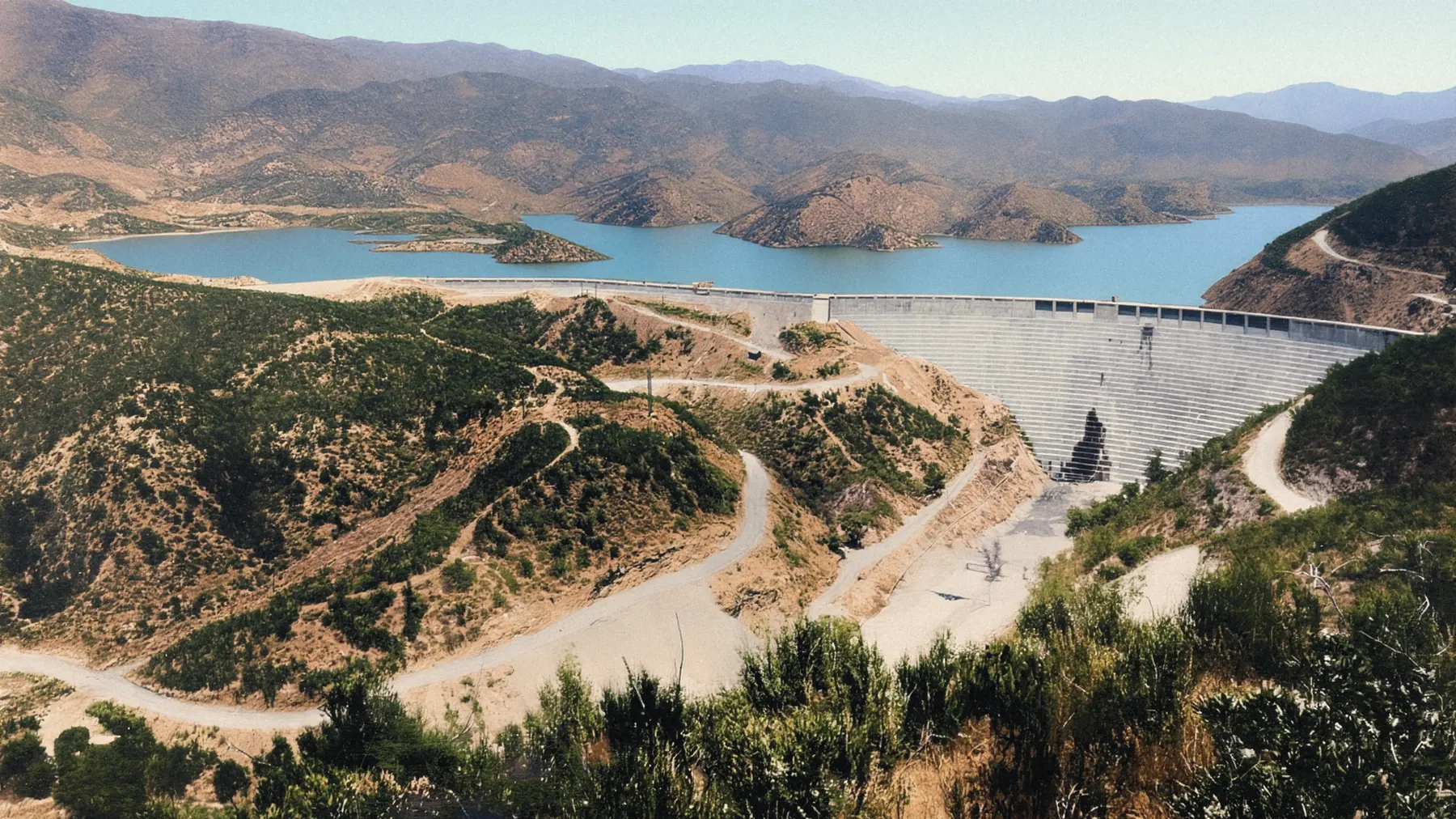
A derivative takes the lower tier. An archival photograph that has been colourised, relit, extended or cleaned by a model is classified as a synthetic reconstruction, not an archival document, and is labelled as one, even when the original is in the public domain. The third plate above began as the first.
What is changed on this site. Archival plates are cropped to remove scan borders where noted and resized for the web. The before-and-after pair in Record EP-01 is registered by one uniform scale and a shift only. Cartographic plates are the film’s own, re-tinted to this publication’s palette; their content is unchanged.
Synthetic media disclosure
Synthetic reconstructions are used strictly to illustrate documented moments for which no primary archival record exists. Every reconstruction is directed, selected, and verified by ApsisLens against primary historical sources, and is never presented as documentary evidence.
What is synthetic in a film is said in four places.
- On the frame. Every AI-made picture, still or moving, carries the label RECONSTRUCTION while it is on screen.
- In the dossier. Every reconstruction shown carries the synthetic badge, and the generation systems are named in the credits under “Synthetic media & visual provenance”.
- To the platform. A film that shows realistic synthetic scenes of a real event is declared under YouTube’s altered or synthetic content policy when it is uploaded.
- In the file. Web plates carry Content Credentials metadata added at export. Every plate carries it, archival ones included. It records that export, not how a picture was first made, so the badge above each caption remains the statement of provenance.
A reconstruction shows what the record describes. It adds no fact of its own, and nothing in a dossier is argued from one. The figures, clothing, weather and viewpoints in a reconstruction are illustrative unless a caption says otherwise.
Sound is treated the same way. Ambience and effects in a film are sound design, some of it synthesised. They are not recordings of the event.
Corrections
An error in a dossier is corrected in the dossier, with a dated note and a new revision number in the record strip. A released film cannot be re-cut in place, so where a spoken line is imprecise the correction is made on screen before release when it is caught in time, and in the dossier and the film’s description when it is not.
Corrections that change a date, a figure or an attribution are listed under the record’s notes on precision and stay there.
Citing and contact
Cite the dossier, not the video, when you rely on a date or a figure. Each dossier ends with a citation box in APA, Chicago and BibTeX form, and carries Highwire Press, Dublin Core and Schema.org metadata, so Zotero and Mendeley can save it directly from the page.
The general form is:
ApsisLens. (Year, Month Day). Title of record (Record EP-00). ApsisLens Archive. https://apsislens.com/episodes/…
When you reuse an archival image from a dossier, credit the holder named in its caption and follow the licence shown there. The licence belongs to the holder, not to ApsisLens.
Corrections, source queries and licensing questions reach the editor through the ApsisLens channel on YouTube.